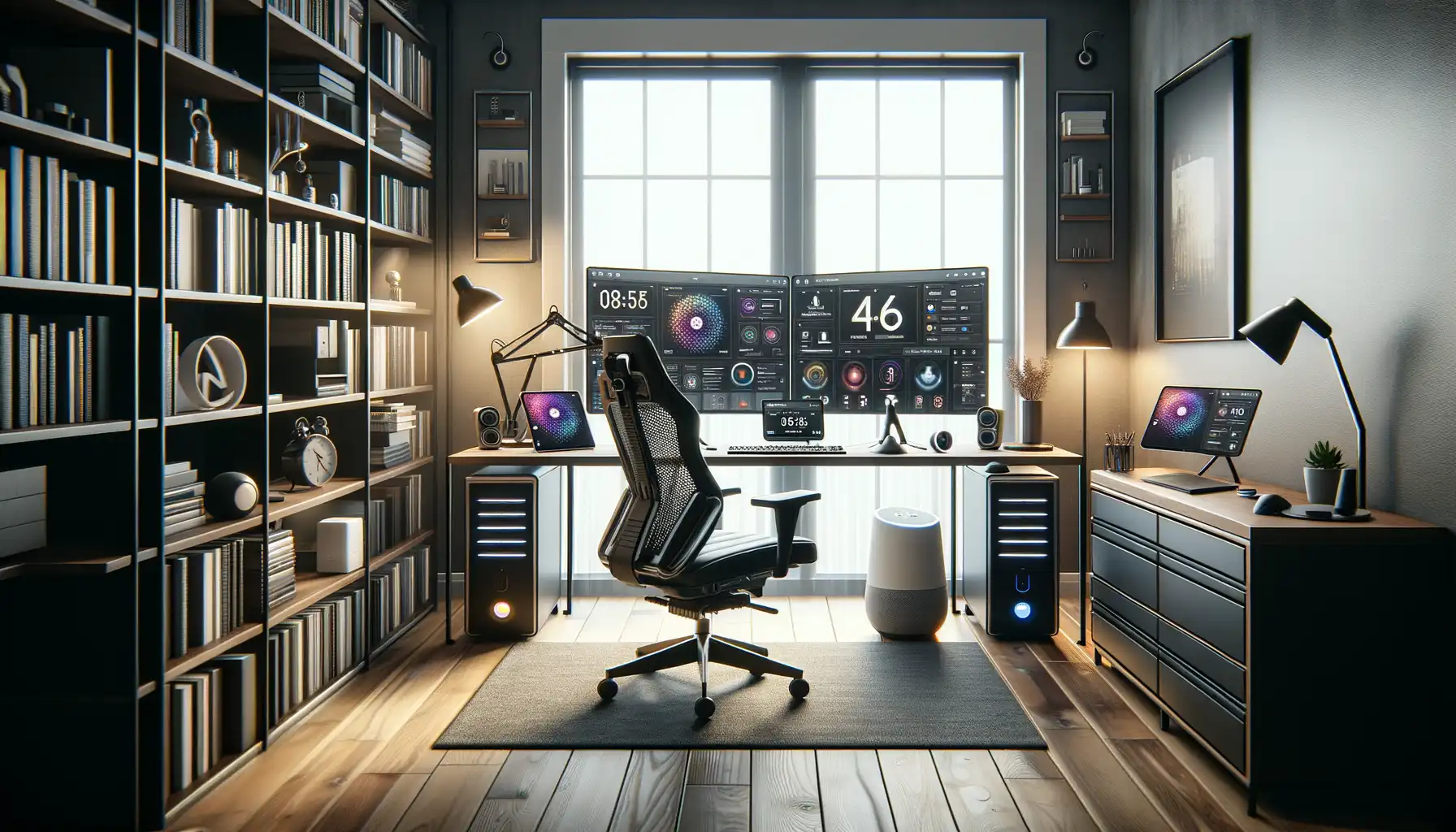
People ask about my home office setup fairly often, usually hoping for a list of exciting gadgets. I always feel slightly guilty disappointing them, because the honest list is shorter and more boring than anyone wants it to be. After years of buying the thing that promised to make me more productive, I have ended up with a small set of tools I actually use every day, and a drawer of expensive lessons about the ones I do not.
The pattern I eventually noticed is that the gadgets that survived in my routine all have one quality in common. I have stopped noticing them. The ones I got rid of are the ones that kept asking for my attention.
The short list that earned its place
A genuinely good keyboard and a genuinely good chair, because I spend most of my life touching one and sitting in the other, and being cheap about your primary interfaces is a false economy I learned the slow way. A single large monitor, not the wall of three I once thought I needed, because more screen turned out to mostly mean more places for my attention to scatter. Good headphones, less for the audio than for the signal they send the rest of the house that I am, for the next hour, unavailable.
That is close to the whole list. None of it is exciting. All of it disappears in use, which is exactly why it stayed.
The best gadget I own is the one I have completely stopped noticing. The worst were the ones that never stopped asking to be noticed.
What I stopped using, and why
The casualties are more instructive than the survivors. The smart gadgets that needed their own app. The note-taking system so elaborate that maintaining it became a second job. The standing desk I was sure would change my life and now use, honestly, as a shelf. Every one of them failed the same test. It added a small, constant tax on my attention in exchange for a benefit I could rarely measure.
I think about tools now the way I think about the software we build. A good one removes friction and then gets out of the way. A bad one adds a feature and a notification and a reason to think about it. With a setup, as with a product, the highest praise is that you forget it is there.
The actual principle
If there is a rule underneath all of this, it is that a tool should serve the work, not become the work. The point of my setup is to make it as easy as possible to do the deep work that matters and as hard as possible for anything to interrupt it. Almost everything I kept does one of those two things. Almost everything I dropped quietly did the opposite while pretending to help.
So when someone asks for my list of must-have gadgets, the truthful answer is anticlimactic. Buy fewer things, buy good versions of the few you actually touch all day, and be ruthless about anything that wants your attention more than it earns it. The most productive setup I have ever had is also the most forgettable, and that is not a coincidence.